Saturday, October 9, 2010


Friday, October 8, 2010
Tuesday, October 5, 2010
He did not want to talk about the LTTE. "But we are thinking about our people, Tamil people. This is our motto.!!!
BBC News, Vavuniya
Nearly 400 former LTTE members were freed in the latest round of releases
In a rare interview, a former member of Sri Lanka's defeated Tamil Tiger (LTTE) rebels has been speaking to the BBC about his feelings on being released from 16 months of government detention and rehabilitation programmes.
Dr Kumarasamy Muralitharan was one of 400 former LTTE members, or suspected ex-members, who were the latest batch to be freed in northern Sri Lanka after being inmates in special military-run camps.
He was a registered member and "full supporter" of the separatist group, having trained in their medical colleges and served in their medical wing for 20 years.
He said he had never fought and, as a medic, abhorred violence.
But, he said, the LTTE was in search of a homeland for Sri Lankan Tamils.
"Now I don't think [about it] because there are many many problems associated with this homeland," he said.
"Actually, what's the definition of the homeland? I don't know. We want the rights. And with the rights we can live with peace here."
Dr Kumarasamy spoke as more than 1,000 ex-LTTE fighters or members and their parents, spouses and children gathered in a hall in Vavuniya for the release ceremony.
The government says that about 11,000 such people surrendered and are being gradually released, with a "hard core" of less than 1,000 expected to stand trial.
'Humane treatment'
Human rights campaigners condemn the mass detention as an illegal form of collective punishment, and are outraged that the International Committee of the Red Cross is denied access to them.
The government says it is treating the former insurgents humanely and that it will not "bow down to foreign powers" and change the system.
Rehabilitation Minister 'Dew' Gunasekera says all the detainees will be freed soon It was strange to think that this courteous father-of-four with excellent English had been part of the feared rebel group whose leaders were wiped out by the Sri Lankan military at the close of the war.
Dr Kumarasamy said he worked amid the trauma of the war zone in the final months, treating both "LTTE cadres and most of the public" and working alongside government medics in the Putumattalan hospital amid "the shelling and everything... also the gunshots".
Since handing himself in to the Sri Lankan military he had undergone what the government terms rehabilitation, with training in meditation, carpentry, farming, English and computer studies.
What about politics?
"They gave us an opportunity to realise what was going on in the outside world," he said, pointing out that he and his comrades had spent years in Vanni (northern mainland Sri Lanka) in relative isolation.
There was "nothing forceful" in the training, he added.
Stigma
Dr Kumarasamy admitted, though, that he was nervous about how people like him would be accepted in wider Sri Lankan society.
The former rebels say they are happy to be back with their families The government has not clarified whether it would recognise his and his fellows' medical qualifications.
We finished our chat and the ceremony began.
Three or four former LTTE members were symbolically "reunited" with their families on the stage, a prelude to hundreds more real reunions outside.
The most spontaneous applause came when Minister of Rehabilitation "Dew" Gunasekera announced that all the other people in "rehabilitation" would soon be released.
The government has previously said that some may be kept for up to two years in all.
Mr Gunasekera, a veteran leftist politician in the coalition government, told the BBC he could not be sure whether LTTE medical qualifications would be recognised.
But there was "no obstacle at all for them to come back to society" with the private sector waiting to give them jobs, he added.
Things are unlikely to be that smooth for everyone.
Inmates told the BBC in June that some had had no training at all since being confined.
The chief psychiatrist at the Vavuniya General Hospital, Dr S Sivathas, said there was a stigma attached to them "because all the time we are calling them militants and so on. So society is always looking at them differently".
He pointed out that many were forced to join the rebel group.
But the minister said the thousands released so far this year had done well.
'Friends'
Under a tree, the newly freed men and women and their parents queued to sign documents releasing them from army custody.
Between the young military officers and those queuing up there was laughter.
Kumarasamy Muralitharan, whom I had met earlier, was impatient to get to his family in Jaffna.
"I am very happy because I feel the freedom," he said. "Also I joined my family and children. I want to search for a job."
He said he did not want to talk about the LTTE. "But we are thinking about our people, Tamil people. This is our motto."
Moving into the Tamil language, he added:
"In a war, if one party wins and the other party loses, the winning party has the upper hand, so we can only expect what they give us.
"We believe they will give us something which will prevent things like conflict happening again.
"We have been defeated in this war."
Outside the compound, buses come to take people home, they rev their engines and sound their horns.
Their destination boards read: Jaffna; Mullaitivu; Kilinochchi; Batticaloa.
A man on crutches scrambled to board.
Did he fear for the future?
"I can't say anything now, I just came out so I need to see how things go," he said.
Former members of the LTTE on the bus waved. Two Sri Lankan Air Force officers waved back.
"They're our friends. They've already invited us to their villages," they said.
BBC.CO.UK
Nearly 400 former LTTE members were freed in the latest round of releases
In a rare interview, a former member of Sri Lanka's defeated Tamil Tiger (LTTE) rebels has been speaking to the BBC about his feelings on being released from 16 months of government detention and rehabilitation programmes.
Dr Kumarasamy Muralitharan was one of 400 former LTTE members, or suspected ex-members, who were the latest batch to be freed in northern Sri Lanka after being inmates in special military-run camps.
He was a registered member and "full supporter" of the separatist group, having trained in their medical colleges and served in their medical wing for 20 years.
He said he had never fought and, as a medic, abhorred violence.
But, he said, the LTTE was in search of a homeland for Sri Lankan Tamils.
"Now I don't think [about it] because there are many many problems associated with this homeland," he said.
"Actually, what's the definition of the homeland? I don't know. We want the rights. And with the rights we can live with peace here."
Dr Kumarasamy spoke as more than 1,000 ex-LTTE fighters or members and their parents, spouses and children gathered in a hall in Vavuniya for the release ceremony.
The government says that about 11,000 such people surrendered and are being gradually released, with a "hard core" of less than 1,000 expected to stand trial.
'Humane treatment'
Human rights campaigners condemn the mass detention as an illegal form of collective punishment, and are outraged that the International Committee of the Red Cross is denied access to them.
The government says it is treating the former insurgents humanely and that it will not "bow down to foreign powers" and change the system.
Rehabilitation Minister 'Dew' Gunasekera says all the detainees will be freed soon It was strange to think that this courteous father-of-four with excellent English had been part of the feared rebel group whose leaders were wiped out by the Sri Lankan military at the close of the war.
Dr Kumarasamy said he worked amid the trauma of the war zone in the final months, treating both "LTTE cadres and most of the public" and working alongside government medics in the Putumattalan hospital amid "the shelling and everything... also the gunshots".
Since handing himself in to the Sri Lankan military he had undergone what the government terms rehabilitation, with training in meditation, carpentry, farming, English and computer studies.
What about politics?
"They gave us an opportunity to realise what was going on in the outside world," he said, pointing out that he and his comrades had spent years in Vanni (northern mainland Sri Lanka) in relative isolation.
There was "nothing forceful" in the training, he added.
Stigma
Dr Kumarasamy admitted, though, that he was nervous about how people like him would be accepted in wider Sri Lankan society.
The former rebels say they are happy to be back with their families The government has not clarified whether it would recognise his and his fellows' medical qualifications.
We finished our chat and the ceremony began.
Three or four former LTTE members were symbolically "reunited" with their families on the stage, a prelude to hundreds more real reunions outside.
The most spontaneous applause came when Minister of Rehabilitation "Dew" Gunasekera announced that all the other people in "rehabilitation" would soon be released.
The government has previously said that some may be kept for up to two years in all.
Mr Gunasekera, a veteran leftist politician in the coalition government, told the BBC he could not be sure whether LTTE medical qualifications would be recognised.
But there was "no obstacle at all for them to come back to society" with the private sector waiting to give them jobs, he added.
Things are unlikely to be that smooth for everyone.
Inmates told the BBC in June that some had had no training at all since being confined.
The chief psychiatrist at the Vavuniya General Hospital, Dr S Sivathas, said there was a stigma attached to them "because all the time we are calling them militants and so on. So society is always looking at them differently".
He pointed out that many were forced to join the rebel group.
But the minister said the thousands released so far this year had done well.
'Friends'
Under a tree, the newly freed men and women and their parents queued to sign documents releasing them from army custody.
Between the young military officers and those queuing up there was laughter.
Kumarasamy Muralitharan, whom I had met earlier, was impatient to get to his family in Jaffna.
"I am very happy because I feel the freedom," he said. "Also I joined my family and children. I want to search for a job."
He said he did not want to talk about the LTTE. "But we are thinking about our people, Tamil people. This is our motto."
Moving into the Tamil language, he added:
"In a war, if one party wins and the other party loses, the winning party has the upper hand, so we can only expect what they give us.
"We believe they will give us something which will prevent things like conflict happening again.
"We have been defeated in this war."
Outside the compound, buses come to take people home, they rev their engines and sound their horns.
Their destination boards read: Jaffna; Mullaitivu; Kilinochchi; Batticaloa.
A man on crutches scrambled to board.
Did he fear for the future?
"I can't say anything now, I just came out so I need to see how things go," he said.
Former members of the LTTE on the bus waved. Two Sri Lankan Air Force officers waved back.
"They're our friends. They've already invited us to their villages," they said.
BBC.CO.UK
Monday, October 4, 2010
‘You can chain me, you can torture me, you can even destroy this body, but you will never imprison my mind’

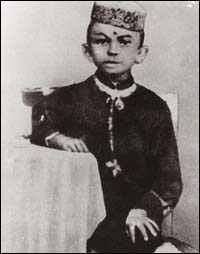
Mahatma Gandhi :
Legend of Peace
Dr.Sulakshi Thelikorala
India’s Father of the Nation, Mahatma Gandhi’s 141st birthday is commemorated on the 2nd of October 2010 all over the world as the International day of Non-Violence and Peace. He was an eminent political figure in India’s independence movement who pioneered towards a peaceful end to centuries of British rule in India. Being one of the world’s most famous pacifists, Gandhi has become the strongest symbol of non violence in the 20th century.
Mahatma Gandhi
Emulating a few great political leaders of all time, he has inspired many across the globe with their freedom movements and protection of civil rights.
Mohandas Karamchand Gandhi was born to a devout Hindu family of merchants on the 2nd of October 1869 in Porbandar, a coastal city of present day Gujarat in Western India. His father, Karamchand Gandhi was a chief of the state of Porbandar from whom the latter part of his name was inherited. His mother, Putlibai Gandhi was a profound devotee of Hinduism whose guidance on the religion and culture later influenced Gandhi indelibly with his Ahimsa movement. His renowned first name ‘Mahatma’, resembling ‘Great Soul’ in Sanskrit was bestowed upon him by Rabindranath Tagore as an honorary name during his struggle for independence.
Young Gandhi
The young Mohandas attended the middle school in his home town Porbandar and high school in Rajkoth.
The youth was an average student in his academic work on whom great Indian epics left an ingrained impression than to any other child of the same age. At the age of 13, Mohandas married Kasthurbai Makhanj from an arranged child marriage keeping in with the regional customs and traditions, from which Mohandas and Kasthurbai had four sons.
The legend’s patriotic feelings came into light when the youth traveled to Britain to study law, a month shy from his 19th Birthday. Breaking the family traditions, he joined the University College of London to train himself as a barrister. During his stay in the Imperial capital, he becomes interested in religion like never before, yet adopting himself to English customs such as taking on dancing lessons.
It is during this short stay of 2 years when he is motivated to read on civil disobedience, inspiring him on the principles of non violence.
Paying floral tribute to Gandhi’s statue
Two days of becoming a barrister, the 21 year old returns to India to find out that his mother has passed away while he was studying in London which his family has kept away from him. Upon 2 years after returning, Gandhi fails to establish a decent practice of law when he is forced to leave India to Natal in South Africa on a one year job contract.
Retaliating discrimination
A chain of frustrating events in South Africa initiated the transformation of a young expatriate lawyer into a national hero.
The most famous incident is when Gandhi was thrown off a train after refusing to move from the first class to a third-class coach while holding a valid first-class ticket.
From his first hand experience, Gandhi realizes the discrimination faced by his fellow Indians in South Africa, which was another colony of the British Emperor.
The racial discrimination starts to disturb the young barrister who determines to fight against the injustice and grievances faced by the Indians working in South Africa which lays the foundation to his politics of peace protests. As a result, Mohandas leads his civil disobedience campaigns where he is arrested several times like many other great political leaders of all time.
The peaceful rebellion established the Natal Indian Congress and adopts his still evolving methodology ‘sathyagraha’ for the very first time in South Africa.
Despite the struggle, Gandhi becomes the first coloured lawyer to get admitted to the South African Bar. He extends his intended one year duration of stay to twenty long painstaking years solely to continue the fight for the Indians in South Africa.
The legend
Mahatma Gandhi returns to India in 1914, after 20 years of peaceful battle in South Africa against racial discrimination. Since then he is determined to strive for the long awaited independence of his motherland while and reconciliating of all races and classes in the multi ethnic Indian Subcontinent.
Upon his return, the legend leads the newly found Indian National Congress Party towards achieving independence.
The well known campaign led by Gandhi was the Salt March, the mass protest in 1930 against the British Salt Monopoly where thousands of Indians marched 200 miles to the Indian Ocean to make salt by themselves. In 1947, India achieves their long awaited independence, bringing an end to centuries of British rule.
Young Mohandas
Even after gaining independence from the Imperial rule, Gandhi continued his way forward with peaceful resistance to violence against the racial discrimination and reconciliation of Hindus and Muslims which ultimately leads to his tragic death.
On the 30th of January 1948, the 79 year old India’s Father of the Nation was assassinated while he was walking to a platform from which he was to address a prayer meeting.
The assassin was identified to be Nathuram Godse, a fellow Hindu linked to an extremist Hindu movement who held Gandhi responsible for weakening India by insisting upon a payment to Pakistan. Gandhi’s martyrdom made him a greater symbol of peace. Today, his death is commemorated in India as the Martyr Day to remember and appreciate those who have given up their lives for the country.
In retrospect, it is indeed a mystery how this great Indian National Leader has been missed in the Nobel Laureate list.
Nevertheless, he has been nominated to the Nobel Peace Prize five times since 1937 to 1948, which was two days after his assassination.
In 1948, the year of his demise, neither a posthumous award was awarded to Gandhi nor was anybody else given the award by the Norwegian Nobel Committee, who later publicly declared its regret for such an omission of a great leader whom they failed to appreciate.
The legend had been a celebrated figure in literature, film and theater.
The 1982 movie ‘Gandhi’ portrayed by Ben Kinsley, which won the Academy Award for the best picture has been a most popular production based on the legend’s life.
Mahatma Gandhi has influenced many leaders across the world such a Martin Luther King and James Lawson, who have drawn writings of Gandhi in the development of their own theories about non violence.
Nelson Mandela, the great anti apartheid freedom fighter of South Africa, was also influenced by Gandhi in his long walk to freedom who was a follower of non violence resistance philosophy of Gandhi.
Mahatma Gandhi is a distinguished political leader due to his principal ‘Ahimsa’ which pioneered India’s independence movement.
Although Gandhi was not the originator of the non violence principle, he was the first to apply it in a political struggle.
Thus, his birthday on the 2nd of October is commemorated in India as the Gandhi Jayanthi and worldwide as the International day of Non Violence and Peace.
‘You can chain me, you can torture me, you can even destroy this body, but you will never imprison my mind’
Produced by Lake House Copyright © 2010 The Associated Newspapers of Ceylon Ltd.
You killed one Prabhakaran but do not let another grow! You cannot prevent another one with swords and guns!You can only do it with your heart/wisdom!
Speech delivered by lawyer and unofficial advisor during Bill Clinton and Obama Administration:
Return to paradise
George R WILLIE
Welcome Your Excellency to this great city. Ignore the oak trees and mocking birds we could easily mistake this for Sri Lanka. It is in Sri Lanka that I was borne and my mother and parents of my wife Shanthi, our grandfathers and grandmothers were all buried under the sacred soil of my motherland. I grew up Your Excellency, in Jaffna and moved to Colombo when I was only 10 years old. My wife is from Badulla, grew up in Diyathalawa where her father was a well-respected captain in the Army.
President Mahinda Rajapaksa
I smelt the sweetness of Magoza trees in Jaffna and taste of the Red Jumbo fruits and left red stains on my white shirt as I walked to school in Colombo. I know the lure of Jack fruits ripening on the trees as crows begin to open them. I have seen the bright colour of pandols during Wesak and shamelessly ate food at Dansala meant for the poor. And I have heard the chanting of Kovils and inhaled the smell of jasmine and Jose sticks. I have heard the bell of All Saint’s Church as I assisted father Herath during Mass.
But since I left Sri Lanka in 1975 there has been much pain, much sorrow and much agony. The mighty Mahaweli Ganga that usually bring its sacred water to the paddy fields spat out blood, both the Sinhalese and Tamils. From up here in the United States I have watched the land of my forefathers descend from paradise deep in to hell. No one can say with certainty who is to blame but the time for blaming is gone for long.
Your Excellency, you power be descended from Dutugemunu and my people from Elara. Remember how Dutugemunu faught Elara on his Elephant Kandula and killed Elara. Dutugemunu of course is still remembered for uniting Sri Lanka for the first time. But he is also remembered for something else. After defeating and killing Elara he built a monument for Elara out of respect for his worthy opponent. He ordered all the citizens of the land to stop dismount and pay respect to Elara. In so doing he not only showed what a noble men he was, but also proved to be a great politician. He knew that he had to rule the Tamil people after the defeat of Elara.
Your Excellency, faith, fortune and your great political skill have placed you at a unique point in history. Children years to come, will read in their history books, that a great leader, a great worrier by the name of Mahinda Rajapaksa finally defeated the rebellion after nearly 25 years where several before him failed. They may even say that you are Dutugemunu of the 21st century. But if you want to bear Gemunu’s mental integrity Your Excellency, you will have to build a monument too. That monument does not have to be a Dagaba or a building. It will have to be a new policy backed by law.
Do not make the mistake that sparked the 58 riots. Do not hold back Tamils who want to get into universities. Do not make the Tamils feel like they are second class citizens. Respect their religion and respect their language. There is something about the Tamil people you need to know Your Excellency.
To them their language is God. There are only few cultures in the world, which has such devotion to language. You were trained as a lawyer and in your early carrier you were a formidable defender of human rights. Now you have the popularity, you have the power of a hero, like Julius Saeser, returning to Rome from his conquests. No one can deny what you are. You and I read in law school, then we have had to study the Soulbery Constitution. Ask the Parliament to pass the required legislations. If you need my help I will give it. The Tamil people are hungry for you to assure them that there is a place for them.
Make sure they have one. You killed one Prabhakaran but do not let another grow. You cannot prevent another one with swords and guns. You can only do it with your heart and wisdom. Compassion, truth and justice your learnt from the Buddha are the only weapons you need. In the Dhamma Pada Buddha says that hatred could only be countered with hatred. Hatred could only be caused to cease with love. This is an old rule.
Your Excellency as you leave this city and return to Sri Lanka, promise me that a 10 year old boy walking to school tomorrow in his white shirt will have no other red stain that from Jumbo fruits. A morning crow will not open anything other than a ripe jackfruit. That there is nothing else hanging from a Magoza tree.
Your Excellency returned us to paradise.
Produced by Lake House Copyright © 2010 The Associated Newspapers of Ceylon Ltd.
Return to paradise
George R WILLIE
Welcome Your Excellency to this great city. Ignore the oak trees and mocking birds we could easily mistake this for Sri Lanka. It is in Sri Lanka that I was borne and my mother and parents of my wife Shanthi, our grandfathers and grandmothers were all buried under the sacred soil of my motherland. I grew up Your Excellency, in Jaffna and moved to Colombo when I was only 10 years old. My wife is from Badulla, grew up in Diyathalawa where her father was a well-respected captain in the Army.
President Mahinda Rajapaksa
I smelt the sweetness of Magoza trees in Jaffna and taste of the Red Jumbo fruits and left red stains on my white shirt as I walked to school in Colombo. I know the lure of Jack fruits ripening on the trees as crows begin to open them. I have seen the bright colour of pandols during Wesak and shamelessly ate food at Dansala meant for the poor. And I have heard the chanting of Kovils and inhaled the smell of jasmine and Jose sticks. I have heard the bell of All Saint’s Church as I assisted father Herath during Mass.
But since I left Sri Lanka in 1975 there has been much pain, much sorrow and much agony. The mighty Mahaweli Ganga that usually bring its sacred water to the paddy fields spat out blood, both the Sinhalese and Tamils. From up here in the United States I have watched the land of my forefathers descend from paradise deep in to hell. No one can say with certainty who is to blame but the time for blaming is gone for long.
Your Excellency, you power be descended from Dutugemunu and my people from Elara. Remember how Dutugemunu faught Elara on his Elephant Kandula and killed Elara. Dutugemunu of course is still remembered for uniting Sri Lanka for the first time. But he is also remembered for something else. After defeating and killing Elara he built a monument for Elara out of respect for his worthy opponent. He ordered all the citizens of the land to stop dismount and pay respect to Elara. In so doing he not only showed what a noble men he was, but also proved to be a great politician. He knew that he had to rule the Tamil people after the defeat of Elara.
Your Excellency, faith, fortune and your great political skill have placed you at a unique point in history. Children years to come, will read in their history books, that a great leader, a great worrier by the name of Mahinda Rajapaksa finally defeated the rebellion after nearly 25 years where several before him failed. They may even say that you are Dutugemunu of the 21st century. But if you want to bear Gemunu’s mental integrity Your Excellency, you will have to build a monument too. That monument does not have to be a Dagaba or a building. It will have to be a new policy backed by law.
Do not make the mistake that sparked the 58 riots. Do not hold back Tamils who want to get into universities. Do not make the Tamils feel like they are second class citizens. Respect their religion and respect their language. There is something about the Tamil people you need to know Your Excellency.
To them their language is God. There are only few cultures in the world, which has such devotion to language. You were trained as a lawyer and in your early carrier you were a formidable defender of human rights. Now you have the popularity, you have the power of a hero, like Julius Saeser, returning to Rome from his conquests. No one can deny what you are. You and I read in law school, then we have had to study the Soulbery Constitution. Ask the Parliament to pass the required legislations. If you need my help I will give it. The Tamil people are hungry for you to assure them that there is a place for them.
Make sure they have one. You killed one Prabhakaran but do not let another grow. You cannot prevent another one with swords and guns. You can only do it with your heart and wisdom. Compassion, truth and justice your learnt from the Buddha are the only weapons you need. In the Dhamma Pada Buddha says that hatred could only be countered with hatred. Hatred could only be caused to cease with love. This is an old rule.
Your Excellency as you leave this city and return to Sri Lanka, promise me that a 10 year old boy walking to school tomorrow in his white shirt will have no other red stain that from Jumbo fruits. A morning crow will not open anything other than a ripe jackfruit. That there is nothing else hanging from a Magoza tree.
Your Excellency returned us to paradise.
Produced by Lake House Copyright © 2010 The Associated Newspapers of Ceylon Ltd.
A Tamil Hindu gentleman who had been badly victimised during riots-1983! During this darkest period in SL's recent history,lost all his possessions.!!

Example of religious, communal amity:
Hindu couple donates land for Buddhist temple
By Jaliya WIJEYEKOON
Mr and Mrs Veerappa conducted in a procession to the venue by the dayakayas of the Siri Sugatharamaya temple
View from the main road
The chief priest Ven. Matale Siri Sugatha Thera explaining a point to Veerappa
Veerappa family climbing the first set of steps from the main road
Veerappa family being blessed by the chief priest
Veerappa family at the felicitation ceremony
Chief Priest constructing a retaining wall
chief priest drawing a wall hanger Dhamma school students with the chief priest and teachers
It is an attractive and serene place of worship, situated in the ancient Seethawaka Kindom. It is on a high elevation adjoining Puwakpitiya railway station and beside the Colombo-Ratnapura main highway.
Although this temple is patronised by thousands of devotees, it has a short history running back only 25 years. It was in 1985, that a young priest named Ven. Matale Siri Sugatha Thera residing at the Vidya Sunwardhana Temple of Puwakpitiya, was looking for a piece of land to set up a temple. The hilltop with a panoramic view and scenic beauty above the railway station captured the attention of this young bhikku and he managed to meet the owner of this land through an acquaintance.
The owner of the land was one Veerappa, a Tamil Hindu gentleman who had been badly victimised during the July riots of 1983. During this darkest period in Sri Lanka's recent history, Veerappa lost all his possessions and had to leave the area and live permanently in Colombo.
Gentleman of rare calibre
When the request for the land was made by the young Sinhala Bhikkhu, Venerable Matale Siri Sugatha Thera, just two years after the bitter experience of 1983, this gentleman with a different religion and ethnic origin never hesitated, even for a while, but readily donated this piece of land extending to an almost an acre to the Venerable Thera by a gift of deed.
This genuine gesture of Veerappa amply proved the degree of commitment, respect and love that he had towards Buddhism and his countrymen, irrespective of any differences such as religion, race, caste, creed or nationality. It is even more appreciated by the grateful public of the area and the surrounding villages as this meritorious act was executed during the commencement of the conflict in our country which finally aggravated to a ruthless war and a national disaster. Veerappa showed the country that except for a tiny percentage in each community, the majority of the people respected each others values, beliefs, cultures and civilizations.
After his donation, with the passage of time, there emerged the Siri Sugatharama Temple, turning the said land to a sacred place open to all devotees. This temple still receive the blessings of Veerappa in its development activities.
This noble person, together with his family members, continue to participate at special religious functions organised by the temple. The chief priest of the temple never forgets to invoke blessings on this gentleman and his family at every meritorious act conducted at the temple.
By now Siri Sugatharamaya has become a picturesque and a sacred place of worship with an atmosphere of complete serenity pervading the area. It has become a centre for religious advancement and national integration. It performs a great service to the area including the promotion of religious and moral values in young people. All these have become possible due to the integrity and nobility of Veerappa and family.
Chief incumbent
The chief priest, Matale Siri Sugatha Thera is an eternally committed person with a great vision and a person with a multitude of skills. He designed the buildings himself and carried out the construction with financial assistance from the regular dayakayas and visiting devotees. Since this plot of land is hilly and uneven, he designed the essential segments of the temple on four layers or stages.
The main shrine room, the main hall and the abode for Bhikkhu is on the first level which is accessible through a beautifully constructed set of 34 steps. It is enclosed by a majestic parapet wall of elephantine images, with a Makara Thorana on top of the steps.
The second layer of the premises consists of two Samadhi Buddha statues with an attractive canopy and a Cetiya being constructed by its side. It is accessible through another set of neatly constructed steps from the first level of the temple. The third level is about 100 feet above the second stage and a shrine room and the Dhamma school building is to be built on it. It is accessible through another set of steps and a beautiful Wahalkada. The fourth level or the topmost stage of the temple hugs the sky with the Bo tree and Bo Maluwa enclosed by the Walakulu Bamma, and accessible through a long set of steps.
Solid walls are constructed around all four stages of this temple premises and it is surprising to see how this religious place has been developed to this extent during a short period of 25 years. The chief priest Ven. Siri Sugatha thera has personally handled all these construction work while the labour was provided by dayakayas.
All Buddhist religious activities are conducted in this temple with the able support and contribution of its dayakayas. The most important feature is the famous daham school where hundreds of small children receive dhamma education. A large number of students who attended this school have already got through public examinations in dhamma.
On poya days the temple is busy as a beehive with various activities taking place from early morning until midnight or sometimes even till the following morning with devotees observing Atasil. Dhamma orations from visiting bhikkus, dhamma discussions, Bodhi Poojas, and similar activities are regularly conducted on poya days at this temple.
The secret behind the success of this place of worship is the sheer commitment and dedication of the chief priest and his disciples to the cause of Buddhism, peace, harmony and national integration.
Felicitation
On completion of a quarter century of its establishment the chief priest decided to organise a grand felicitation ceremony for the former owners of this land, Mr. and Mrs. Veerappa. the idea was submitted to his dayaka sabha and was unanimously approved.
Lengthy and elaborate arrangements were made to honour this couple by the priest and the entire membership of the dayaka sabha.
The felicitation ceremony was held on the Esala Fullmoon poya day on a grand scale. The Veerappa couple were led to the temple in a procession with the participation of all Nayake Theras of other temples in the area, a large number of bhikkus, other religious dignitaries, politicians of the area, government officials, a large number of schoolchildren and devotees of the temple. All those who addressed the gathering appreciated the generosity of the Veerappa couple and extended their fullest gratitude to them for their invaluable contribution to the area.
At the end of the felicitation ceremony, a Bodhi Pooja was conducted by the Chief Priest, Ven. Siri Sugatha Thera to invoke blessings on the Veerappa family.
Produced by Lake House Copyright © 2010 The Associated Newspapers of Ceylon Ltd.
They have to find a way of making all communities live in peace and harmony! What the international community can do is to assist in this endeavour..!

Germany to support development in Lanka
By Shanika SRIYANANDA
The Sunday Observer invites views from diplomatic missions here and abroad for the greater understanding of their political, social and cultural relations in their respective countries.
Please submit your entries by E-mail : dpl@sundayobserver.lk
With the dawn of peace after 30-years, more German tourists visit Sri Lanka while more German investors are planning to invest due to the economic and political stability of the country.
Germany, which has been helping the country for nearly 60-years, is hopeful that its government can do more to uplift the people of the country, who suffered from the deadly conflict.
German Ambassador Jens Ploetner said in an exclusive interview with the Sunday Observer that Germany would help Sri Lanka develop in the post conflict era.
"Last year we spent almost US $ 15 million as aid and we will spend about the same amount this year", he said.
The Ambassador was interviewed last week on the day he turned 43. Instead of a gala party he celebrated his birthday with the villagers of Manapaha, in Kurunegala, who were gifted with a German funded 'Senehasa' rice mill which will assist over 200 paddy farmers. Travelling around the country often, Ploetner said that he and his family were happy that he was posted to Sri Lanka. " We have found the country to be very beautiful and the people-friendly", he said.
Excerpts of the interview :
Q:In post the conflict Sri Lanka, what would be Germany's contribution to develop the country?
A: Sri Lanka is facing the challenge of transforming itself from a country at war to a society living in peace. This is a huge task and the main work has to be done by the people of Sri Lanka themselves. They have to find a way of making all communities live in peace and harmony. What the international community can do is to assist in this endeavour. This is where I see a role for Germany.
Meet German Ambassador
* Name: Jens Uwe Plotner
* Date of birth: September 29, 1967
* Place of birth: Eutin, Germany
* Family status: Married, one child
*1987: Baccalaureate/Higher Education Entrance Qualification/A Levels
*1987 - 1988: Military Service
*1989 - 1993: University studies in law and political science in Hamburg, Bordeaux and Paris
*1996 - 1998: Deputy Chief of Staff to the State Minister for European Affairs in the German Federal Foreign Office
*1998 - 2002: Political Counsellor, German Embassy Tel Aviv
* 2002 - 2005: Spokesman for Middle Eastern and UN-Affairs, Press Department of the German Federal Foreign Office
* 2008 - 2009: Spokesman of the German Federal Foreign Office
* 2009: Ambassador to Sri Lanka
Q:What is the total commitment of assistance this year and what is the progress made when compared to previous years?
A: Fifty years ago, Sri Lanka was one of the first countries to benefit from German Development Co-operation. Many people know of our lighthouse projects and the German Technical College in Moratuwa. Since then we have continued to work in a number of fields such as agriculture, energy, the Mahaweli water scheme and vocational training. In recent years, alleviating the consequences of the armed conflict became our main focus.
Last year we spent almost US $ 15 million as aid and we will spend about the same amount this year. To this you have to add Germany's contributions to the EU and the UN-budgets. All in all, I believe we have seriously tried to contribute to the long-term development of Sri Lanka.
Q: Demining is one area to which the German government offered help. What is the progress in this area?
A: I totally agree that demining is a top priority because it is a pre-condition for families to finally return to their homes.That is why we have spent US $ 1 million on de-mining.
I can very well understand that displaced families are very impatient and want to return home as soon as possible. But we need to make sure that the quality of de-mining is 100 percent. I visited the de-mining sites and saw the meticulous work FSD, the organization that we are funding, is doing. Remember that a few months ago a French de-miner of this organisation lost his life while clearing a mine-field. So you see: People are actually risking their lives to make Sri Lanka a safer place. I feel that deserves more credit.
Q: After the war the North and the East is the region that needs development. What are the projects that are designed to offer livelihood support for these people?
A: Most of our help goes to the North and the East. We are helping in the construction of houses. In another project, we are training young women and men for jobs in the construction sector in close cooperation with the Chamber of Construction. And then most recently we have started a program in Batticaloa with the Women's Chamber of Commerce to supply livelihood opportunities for war widows. They will be given the opportunity to start a small poultry farm and in that way they can earn an income and also contribute to improve the health and nutrition in the community.
Q: Sri Lanka - Germany have nearly 60-years of diplomatic relationship. How do you evaluate it?
A: Yes, the friendship between our people has a long history. German development aid laid the foundation. Then, work-relations turned into friendship. Starting in the 60's, quite a number of Sri Lankans came to study in the East and West Germany.
That further strengthened the bonds. With the beginning of tourism in Sri Lanka Germany became the number one country of origin of tourists coming to Sri Lanka. And although it might sound paradox the tsunami further strengthened our friendship. Germans felt great sympathy for the people of Sri Lanka suffering from the consequences of this horrible event and donations hit a record level in the aftermath.
Today, after the end of the war in the North the number of tourists from Germany is again picking up with tremendous speed. German tour operators told me this trend would persist.
Q: Tourism is one area that the government expects to develop after ending the war. Do you have any plans to bring more German tourists to the country?
A: German tourists roam freely and its up to Sri Lanka to convince them to visit the island.
President Mahinda Rajapaksa has set an ambitious goal of attracting 2.5 million tourists to Sri Lanka by 2016. And I know that the tourism sector is working hard to meet this target. Whatever the future numbers, I hope that Sri Lanka will conserve a quality tourism respectful of nature and local traditions. German tourists come to the island to be close to nature and to discover your culture and customs. Many also come to Sri Lanka for Ayurvedic treatment. So 500 bed mega-hotels will definitely not be attractive to them.
Q: Are there any plans to revive the travel advisory?
A: We have relaxed the travel advisory significantly since the end of the war and we are going to further relax it from the beginning of this month. The only area which we don't recommend travelling to is the North. One reason being that foreigners are still not allowed to travel to Jaffna.
This is a limitation I quite honestly don't understand and I hope it will be dropped in the near future. Once the state of emergency is abolished, we will reach a situation where we will have no specific travel advisory at all.
Q: You have travelled around the country including the North and the East. What are your observations and what do you have to tell to German tourists and German people about Sri Lanka?
A:It is a beautiful country with friendly people - a travel destination I can only recommend. At the same time, when you live here, you also witness the incredible suffering many people have gone through in the last years. I have met so many war widows who have lost their families - their plight has touched me. At the same time I admire the resilience they show and the dignity they have maintained all along their terrible experience. After meeting them I always feel extremely humble by what I have seen and I am full of admiration and sympathy for these people.
Q: Germany suffered the same war situation some decades back and rose from the ashes to be one of the most developed countries. What are the lessons that Sri Lankans can learn from Germany?
A:Every country has to find its own path. And speaking about Germany, don't forget that after the war my country was divided In the East, a communist regime quelled civil society and basically installed a one-party dictatorship.
Anyone who voiced opposition was put behind bars. In the West, we were lucky enough to receive a democratic constitution. I am convinced that without the rule of law, press freedom and a vibrant civil society West-Germany would not have become the success-story it turned out to be.
Q: What is the support extended for poverty eradication?
A: Apart from livelihood programs, the vocational training for young women and men in the construction field, we are doing some livelihood support projects in the North such as fisheries for example.
While foreign help is important, the main impetus for the eradication of poverty must come from within the country. I have carefully noted, that in his speech to the UN, President Rajapaksa attributed high priority to eradication of poverty in Sri Lanka.
Q: The government invited foreign investments in Sri Lanka after ending the battle against terrorism. How do you expect to encourage German investors to come to Sri Lanka?
A: German companies are starting to look into the possibilities of investing in Sri Lanka. As an Embassy, we can encourage them, but the choice is theirs. Experience has shown that to attract investments, a stable economic and political framework are important.
Q: As a young diplomat what do you have to say about your first appointment to Sri Lanka as Ambassador?
A: My wife and I very consciously chose Sri Lanka as a post. We have found a very beautiful country and friendly people. We have been travelling around seeing wonderful historical sites and nature. We are happy that a year ago we decided to come to Sri Lanka.
Q: Do you think that the country's political and economic stability will bring more support to Sri Lanka?
A: I definitely think that the end of the war has opened new opportunities to attract investors. But we should not forget that the end of the war can only be the first step on the path of attaining sustainable peace.
Produced by Lake House Copyright © 2010 The Associated Newspapers of Ceylon Ltd.
Subscribe to:
Posts (Atom)